How to Pass the Maryland Driving Test
How to Pass the Maryland Driving Test
Passing the Maryland driving test is one of the final steps between having a learner’s permit and earning the freedom to drive on your own. For many new drivers, especially teens and first-time applicants, the test feels stressful because it is not just about knowing traffic laws. It is about showing an MVA examiner that you can control the vehicle, make safe decisions, follow instructions, and stay calm in real traffic.
The good news is that the Maryland driving test is not designed to trick you. It is designed to confirm that you are ready to drive safely without constant supervision. When students fail, it is usually not because they have never driven before. It is often because they were underprepared for the exact skills the examiner is watching, they made preventable mistakes, or they waited until the last minute to practice the maneuvers that matter most.
This guide explains how to pass the Maryland driving test with a practical, local approach. You will learn what the MVA expects, what to bring, what skills to practice, what mistakes can hurt your score, and how professional training through a Maryland Driving School can help you feel ready before test day.
What Is the Maryland Driving Test?
The Maryland driving test, also called the MVA driving skills test or behind-the-wheel test, is the exam you must pass to move from a learner’s permit to a provisional driver’s license. During the test, an examiner evaluates whether you can operate a vehicle safely, follow Maryland traffic laws, and make responsible decisions behind the wheel.
The test usually includes two main parts. First, you may be evaluated on basic vehicle control and closed-course skills. This can include maneuvers that show whether you understand steering, braking, space judgment, mirrors, signals, and vehicle positioning. After that, if you meet the required standard, you may continue to the public road portion, where the examiner watches how you handle real driving situations.
This is where many students misunderstand the exam. The Maryland driving test is not only about one maneuver. It is about consistency. You can know how to turn, stop, park, and change lanes, but if you forget to check your blind spot, roll through a stop sign, signal too late, or panic under pressure, your performance may not be strong enough to pass.
Maryland Driving Test Requirements Before You Schedule
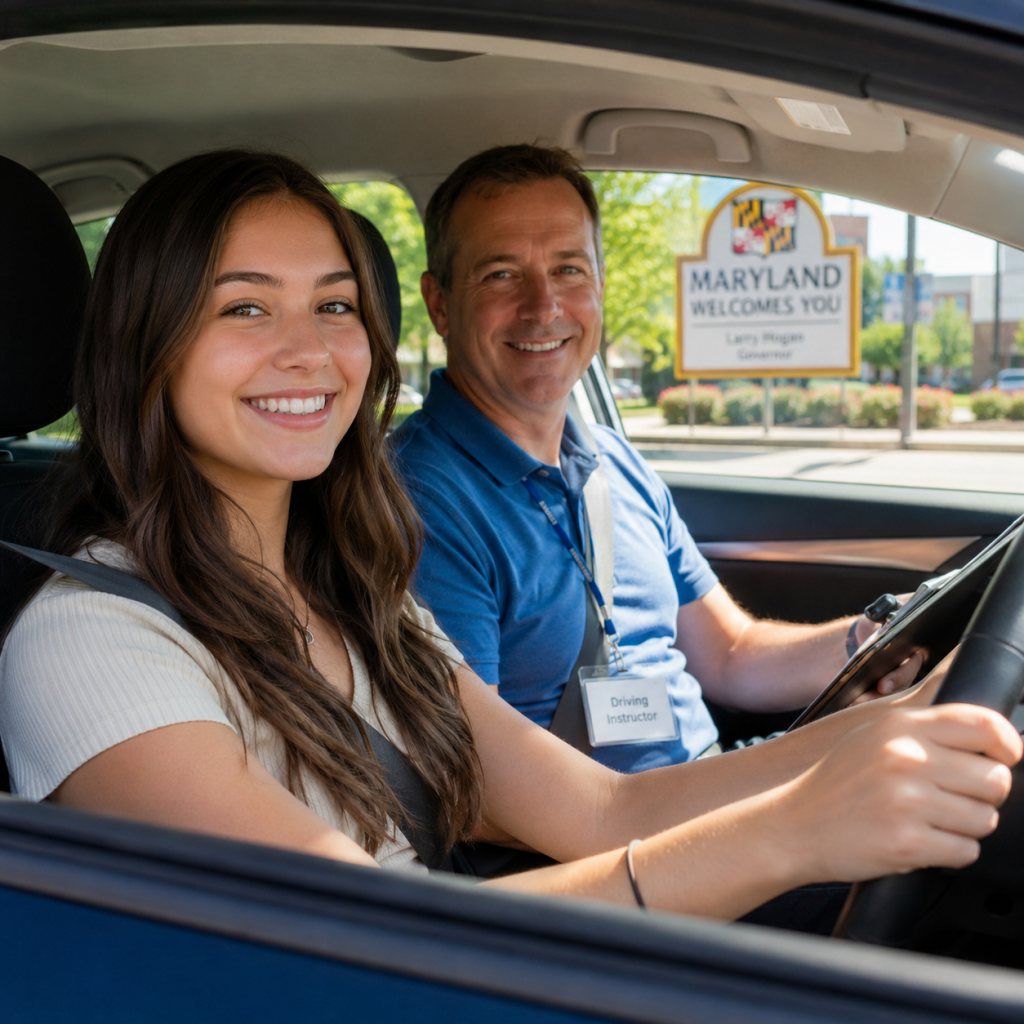
Before taking the Maryland driving test, you need to make sure you are eligible. New drivers in Maryland must complete the state’s graduated licensing process, which includes holding a valid learner’s permit, completing approved driver education, logging required practice hours, and meeting age and record requirements.
Maryland requires new drivers to complete a certified driver education course that includes 30 hours of classroom instruction and 6 hours of behind-the-wheel training. This is one of the most important steps because your driving school submits completion information electronically to the MVA. If that record is not complete, you may not be able to move forward smoothly.
Most new drivers under 25 must also complete 60 supervised practice hours, including at least 10 nighttime hours. Drivers who are 25 or older generally have a shorter practice requirement, but they still need supervised driving experience and must meet MVA eligibility rules.
This is why preparation should start before test week. The students who feel most confident usually do not treat the test as a one-day event. They build the habit of checking mirrors, controlling speed, stopping fully, scanning intersections, and making smooth decisions during everyday practice. A structured 36-hour MVA course can help organize that preparation so students are not guessing what to study or practice.
How to Practice for the Maryland Driving Test
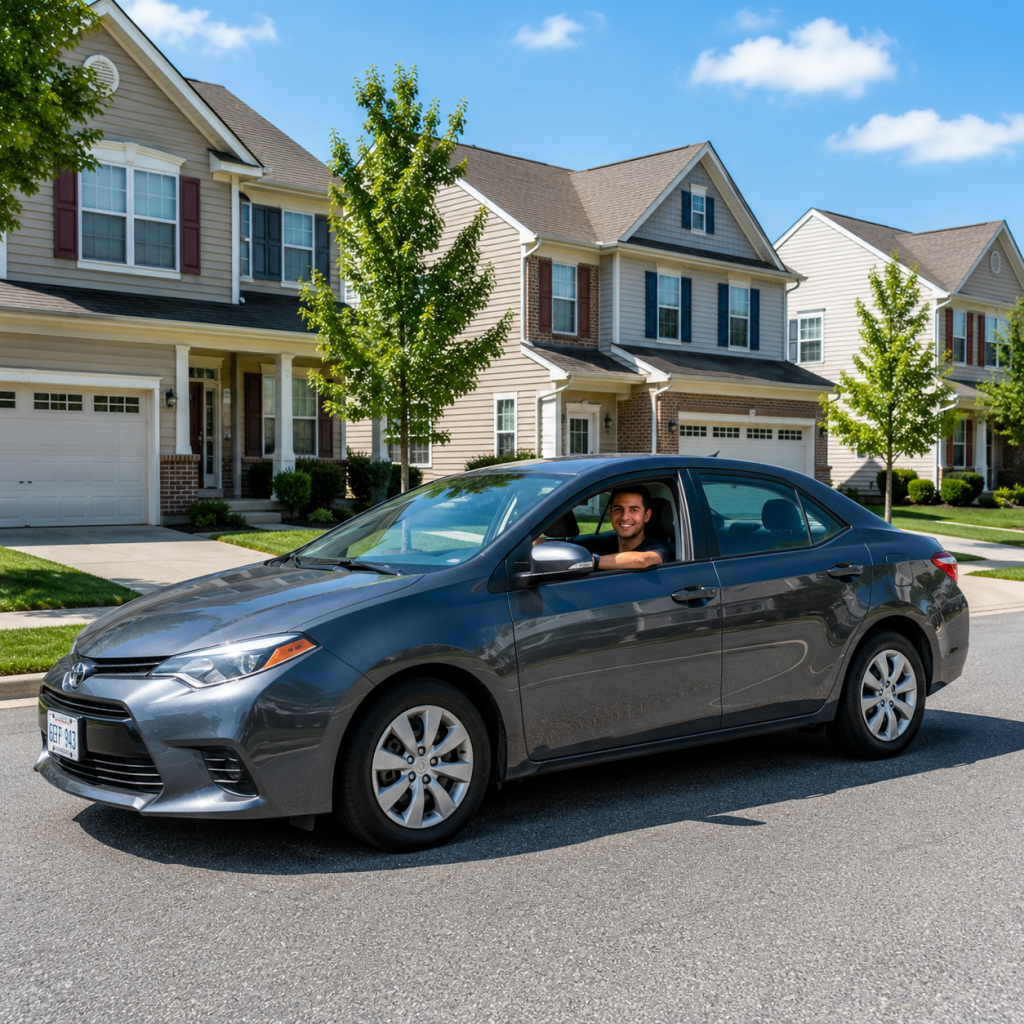
The best way to practice is to recreate the types of situations you will face during the test. You should not only drive around familiar neighborhood streets. You need a mix of low-speed control, residential driving, traffic signals, stop signs, lane changes, turns, parking, and real-road decision-making.
Start with vehicle control. Practice smooth starts and stops until they feel automatic. Your braking should not feel sudden unless there is an emergency. Your turns should be controlled, with the correct signal, proper speed, and good lane position. When you stop, stop completely before the line, crosswalk, or intersection edge.
Then focus on scanning. Every few seconds, you should be aware of what is ahead, behind, and beside you. Use your mirrors naturally, but do not rely on mirrors alone. For lane changes and certain movements, shoulder checks are essential. Many students lose points because they move the vehicle before proving that they looked.
Once basic control feels comfortable, practice in slightly more complex areas. Drive near intersections, school zones, multi-lane roads, and places where you need to read signs quickly. The test may not take you through the hardest roads in Maryland, but it will require you to respond to real conditions.
A professional instructor can be especially helpful because they notice habits that family members often miss. Small things like signaling too late, turning too wide, stopping past the line, or forgetting a mirror check can become repeated mistakes. Working with a Maryland driving instructor before the test can correct those habits before they cost you.
Common Mistakes That Make Students Fail the Maryland Driving Test
Many driving test mistakes are preventable. One of the most common is not making a complete stop. At stop signs, the vehicle must fully stop. Slowing down almost to zero is not enough. The examiner needs to see that the wheels stop moving and that you check traffic before continuing.
Another common mistake is poor observation. Students may look forward but forget mirrors and blind spots. Before changing lanes, pulling away from a curb, turning, or entering traffic, you need to show awareness. Even if the road looks clear, the examiner is evaluating your process.
Speed control is another issue. Driving too fast can make you look unsafe, but driving too slowly without reason can also create problems. You need to stay within the speed limit and adjust for traffic, weather, road conditions, and signs. The safest drivers are not nervous or aggressive; they are controlled.
Lane position also matters. Drifting, hugging the curb, turning into the wrong lane, or crossing lane markings can hurt your score. During turns, keep the vehicle in the correct path and finish in the proper lane. During lane changes, signal, check mirrors, check blind spots, move smoothly, and cancel the signal after completing the move.
Nerves can create mistakes too. Some students know what to do but rush because they feel watched. Others freeze and hesitate too long. This is why practice under realistic conditions is so useful. The more familiar the process feels, the easier it is to stay calm.
How to Stay Calm During the Maryland Road Test
Feeling nervous before the driving test is normal. The key is not to eliminate nerves completely, but to keep them from taking over your driving. Confidence comes from preparation, not from hoping everything goes perfectly.
Before the test, avoid cramming too much new information at the last second. Instead, review your strongest habits: complete stops, mirror checks, signals, speed control, lane position, and smooth turns. These are the basics that carry you through the exam.
During the test, listen carefully to the examiner’s instructions. If you do not understand an instruction, it is okay to ask for clarification. Do not guess and make a rushed movement. The examiner is looking for safe decisions, and asking a simple question is better than making an unsafe turn or lane change.
You should also remember that one small mistake does not always mean you failed. Many students make a minor error and then mentally give up. Stay focused until the test is over. Correct what you can, keep driving safely, and do not let one moment affect the rest of your performance.
Why a 36-Hour MVA Course Can Help You Pass
A 36-hour MVA course is valuable because it gives structure to your preparation. Instead of practicing randomly, you learn what Maryland expects from new drivers and how to build the skills needed for both safety and confidence.
The classroom portion helps students understand traffic laws, signs, right-of-way, defensive driving, and risk awareness. The behind-the-wheel portion helps turn that knowledge into real driving habits. That combination matters because passing the test is not just about answering questions or memorizing rules. You need to apply those rules while controlling a vehicle in real time.
For many students, the biggest benefit is feedback. A certified instructor can tell you exactly what needs improvement before the MVA examiner sees it. That might include checking blind spots more clearly, improving turns, managing speed, practicing parking, or learning how to stay calm during traffic situations.
If your goal is to pass the Maryland driving test and feel prepared for independent driving, scheduling your MVA 36-hour driving course is one of the smartest steps you can take before test day.


Final Tips to Pass the Maryland Driving Test
The best way to pass the Maryland driving test is to prepare like the examiner is evaluating your habits, not your luck. Practice consistently, understand the requirements, bring the right documents, use a safe vehicle, and make sure your driving school completion is properly submitted if required.
Focus on the basics because the basics are what examiners watch closely. Stop fully. Signal early. Check mirrors. Look over your shoulder. Keep both hands ready to control the vehicle. Stay in your lane. Obey signs and speed limits. Make smooth turns. Follow instructions. Stay calm.
Most importantly, do not wait until the last few days to fix weak areas. If you are unsure about your driving skills, your test readiness, or your MVA requirements, professional preparation can make the difference between guessing and feeling ready.
A trusted Maryland Driving School can help you build the confidence, control, and knowledge you need before your appointment. When you are trained correctly, the Maryland driving test becomes less intimidating because you already know what to expect and how to respond.
FAQs
How hard is the Maryland driving test?
The Maryland driving test is not impossible, but it can be challenging if you are not prepared. The examiner looks at vehicle control, observation, traffic law compliance, safe decisions, and your ability to drive calmly on real roads.
What should I practice before the Maryland driving test?
You should practice complete stops, turns, lane changes, mirror checks, blind spot checks, speed control, parking, reversing, intersection safety, and smooth braking. You should also practice driving in different traffic conditions.
Do I need driver education before taking the Maryland driving test?
Most new drivers in Maryland must complete an MVA-approved driver education course with 30 hours of classroom instruction and 6 hours of behind-the-wheel training before they can move forward in the licensing process.
Can I fail the Maryland driving test for not checking blind spots?
Yes. Failing to check blind spots can hurt your score and may create an unsafe situation. Examiners want to see that you are aware of vehicles, pedestrians, cyclists, and hazards before moving.
How can I feel more confident before the MVA road test?
Confidence comes from practice and feedback. A certified driving instructor can help you identify weak areas, correct bad habits, and prepare for the test format before your appointment.