How to Pass the Maryland Driving Test on Your First Try
How to Pass the Maryland Driving Test on Your First Try
Passing the Maryland driving test on your first attempt is not just about knowing how to operate a vehicle. The exam evaluates your ability to stay calm under pressure, follow traffic laws naturally, make safe decisions, and demonstrate confidence behind the wheel.
Many new drivers assume the road test is designed to trick them. In reality, Maryland examiners are looking for consistent, safe driving habits. The problem is that most people arrive underprepared, nervous, or unaware of the small mistakes that quickly add up during the evaluation.
The good news is that passing on your first try becomes much more realistic when you understand exactly what the examiner expects and practice the right way beforehand.
Drivers who complete a structured program like the 36 Hours Driver Education Course often perform significantly better because they train under real driving conditions rather than relying only on informal practice with friends or family.
Why So Many Drivers Fail the Maryland Driving Test
One of the biggest reasons people fail the Maryland driving test is overconfidence. Many applicants know basic vehicle control, but the road test focuses heavily on observation, judgment, awareness, and consistency.
Examiners notice everything. Rolling stops, incomplete mirror checks, hesitation at intersections, poor lane positioning, and failure to scan surroundings are among the most common reasons applicants lose points.
Nervousness also plays a major role. Even drivers who perform well during practice sometimes panic during the actual test. Anxiety often leads to rushed decisions, forgotten signals, or unnecessary mistakes.
Another common issue is lack of exposure to real test conditions. Practicing only in familiar neighborhoods does not fully prepare drivers for traffic variations, unexpected situations, or examiner instructions.
This is why professional instruction matters. A structured program exposes students to realistic driving environments while helping them develop habits that become automatic during the test.
What to Expect During the Maryland Road Test
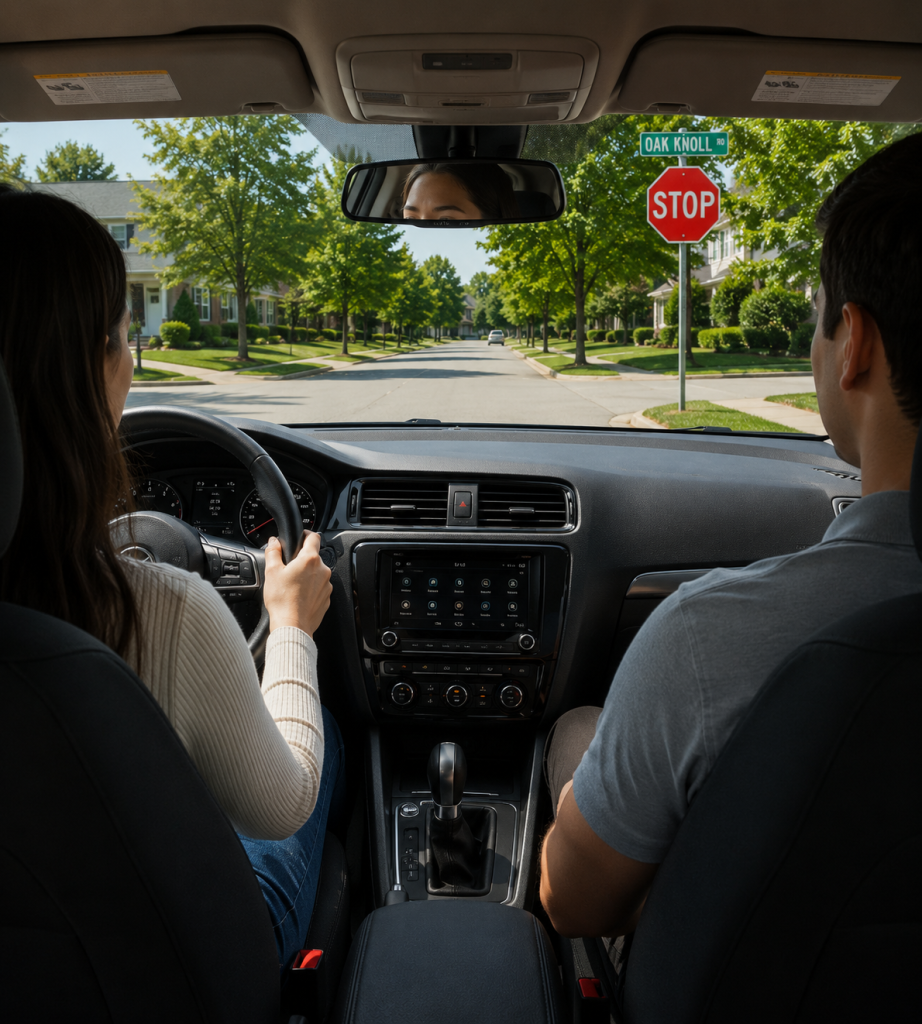
The Maryland road test is designed to evaluate your ability to drive safely in everyday situations. While routes may vary depending on the testing location, the overall structure remains fairly consistent.
The examiner will typically evaluate:
- vehicle control
- turning techniques
- lane changes
- stopping ability
- intersection awareness
- parking skills
- observation habits
- compliance with traffic laws
Before the driving portion begins, you may also complete a brief vehicle safety check. This can include demonstrating headlights, turn signals, brake lights, windshield wipers, and other basic controls.
Once the road test starts, the examiner will provide directions while observing how naturally and safely you respond.
Many applicants fail because they focus too much on “performing” instead of driving normally. Examiners want to see smooth, controlled decision-making rather than exaggerated or robotic movements.
Students who practice through a professional Maryland driver education course usually adapt faster because they become familiar with real testing expectations long before exam day.
The Most Common Mistakes That Cause Automatic Failure
Some mistakes immediately end the test regardless of how well you perform elsewhere.
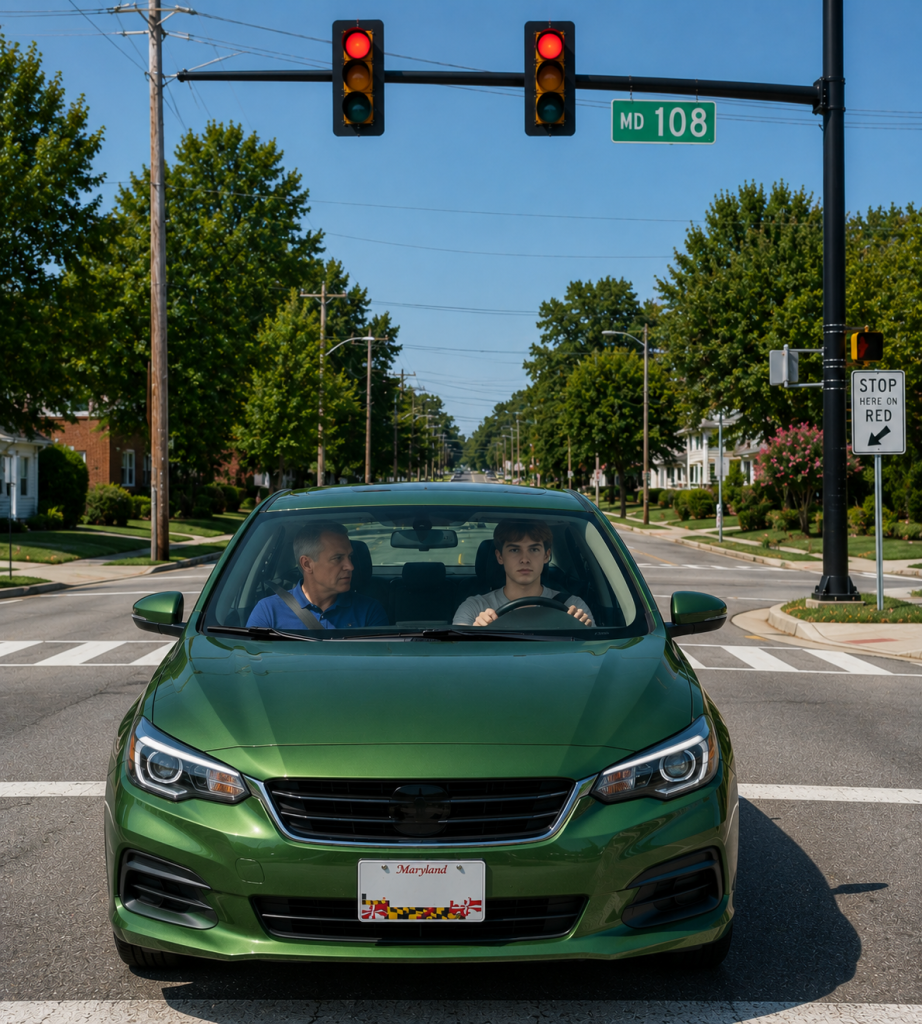
Failing to stop completely at a stop sign is one of the most common automatic failures. A rolling stop signals unsafe driving behavior and is heavily penalized.
Unsafe lane changes are another major issue. Drivers must check mirrors, signal properly, and verify blind spots before moving between lanes.
Speed control also matters more than many applicants realize. Driving too fast is obviously dangerous, but driving excessively slow can also create safety concerns and demonstrate lack of confidence.
Other common automatic failures include:
- causing another driver to brake suddenly
- failing to yield properly
- ignoring traffic signals
- hitting a curb during parking maneuvers
- poor observation at intersections
Many of these mistakes happen because drivers never received structured feedback during practice sessions.
Professional instructors help identify weak areas early so students can correct habits before the official exam.
How to Prepare Before Test Day
Preparation starts long before you arrive at the MVA.
The best approach is consistent, realistic practice over time rather than cramming during the final days before the exam.
Driving in different conditions helps build confidence. Practice during:
- moderate traffic
- residential streets
- multilane roads
- parking lots
- intersections
- school zones
You should also become comfortable with Maryland-specific traffic laws and testing expectations.
A major advantage of enrolling in a professional driving school in Maryland is learning how examiners actually score drivers. Many students unknowingly repeat small habits that negatively impact their evaluation.
In the week leading up to the test, focus on smooth driving rather than perfection. Confidence comes from repetition and familiarity.
Sleep also matters more than people expect. Fatigue increases reaction time, weakens focus, and makes nervousness harder to control.
What Maryland Examiners Look For During the Test
Maryland examiners are not expecting flawless drivers. They are looking for safe drivers.
That distinction matters.
A driver who makes a minor mistake but stays calm and corrects it safely will usually perform better than someone who panics under pressure.
Examiners pay close attention to observation skills. This includes:
- checking mirrors regularly
- scanning intersections
- monitoring pedestrians
- identifying hazards early
Smooth braking and steering are also important. Sudden movements suggest poor anticipation or lack of control.
Communication matters as well. Turn signals should be used consistently and early enough to inform surrounding drivers.
Another overlooked factor is awareness. Drivers who constantly scan their environment demonstrate maturity and preparedness behind the wheel.
These habits are difficult to develop without guided practice, which is why students who complete the Astick Driving School driver education program often feel more comfortable during the test itself.
Parallel Parking Tips That Actually Work
Parallel parking creates anxiety for many first-time drivers, but most failures happen because applicants rush the process.
The key is control, not speed.
Before starting the maneuver, position your vehicle correctly and take a moment to breathe. Rushing immediately increases the likelihood of oversteering or misjudging distance.
Use your mirrors consistently and move slowly enough to make small adjustments.
One of the biggest mistakes drivers make is staring only at the rear of the vehicle. Successful parking requires awareness of the entire surrounding space.
Practicing parallel parking repeatedly in different environments dramatically improves confidence. Drivers who only attempt it occasionally rarely develop consistency.
Professional instructors often teach reference-point techniques that simplify the maneuver and reduce stress during the actual exam.

How Professional Driver Education Improves Your Chances
Many drivers underestimate how much structured education impacts test performance.
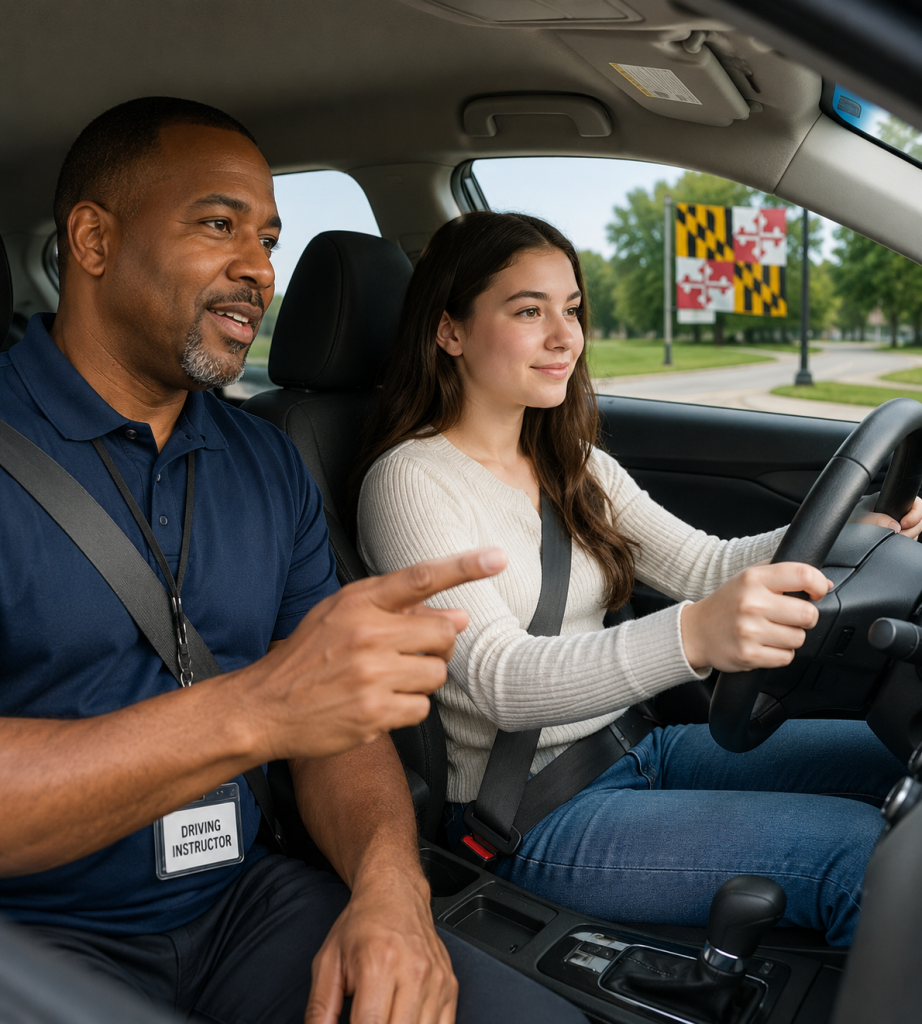
A professional course does more than teach basic driving. It builds defensive driving habits, situational awareness, and confidence under pressure.
Programs like the 36-hour Maryland driver education course expose students to:
- real traffic situations
- instructor feedback
- state testing standards
- defensive driving techniques
- hazard recognition
- safe decision-making
This creates stronger long-term habits compared to informal practice alone.
Professional instruction also reduces uncertainty. Students understand what to expect during the exam, which lowers anxiety and improves focus.
For many drivers, this difference is what separates passing on the first attempt from needing multiple retests.
What to Bring to the Maryland Driving Test
Arriving unprepared can create unnecessary stress before the exam even begins.
Make sure you bring:
- your learner’s permit
- required identification documents
- proof of completed driver education if applicable
- your appointment confirmation
- a properly insured and registered vehicle
The vehicle itself must also meet safety standards. Examiners may inspect:
- brake lights
- turn signals
- mirrors
- horn
- tires
- windshield condition
If the vehicle fails inspection, the road test may be canceled immediately.
Checking everything the day before helps avoid last-minute problems.
How to Stay Calm and Focused During the Exam
Nervousness is normal, especially for first-time drivers.
The goal is not eliminating anxiety completely. The goal is preventing it from controlling your decisions.
One of the most effective techniques is treating the examiner like a GPS rather than an authority figure judging every movement.
Focus only on the current situation. Many applicants fail because they mentally replay earlier mistakes instead of concentrating on the road ahead.
Controlled breathing also helps regulate tension. Taking a slow breath before starting the vehicle can noticeably improve focus.
Confidence usually comes from preparation. Drivers who practice consistently and receive professional guidance tend to remain calmer because they trust their training.
Why Choosing the Right Driving School Matters
Not all driving schools provide the same level of preparation.
Some programs focus only on meeting minimum state requirements, while others prioritize real skill development and long-term driver confidence.
A quality school helps students:
- build safe driving habits
- understand Maryland testing standards
- gain practical road experience
- improve defensive driving skills
- prepare mentally for the exam
Choosing an experienced school like Astick Driving School can make the learning process far less stressful while increasing the likelihood of passing the Maryland driving test on the first attempt.
Students benefit from structured instruction, personalized feedback, and preparation strategies specifically designed around Maryland road test expectations.
If your goal is to become a safer, more confident driver while maximizing your chances of passing, enrolling in a professional driver education program is one of the smartest investments you can make.
Ready to build the skills needed to pass your test with confidence? Explore the 36 Hours Driver Education Course and click Book Now to get started.
FAQs
How hard is the Maryland driving test?
The Maryland driving test is manageable for drivers who practice consistently and understand state driving expectations. Most failures happen because of nervousness, poor observation habits, or lack of preparation.
What is an automatic fail on the Maryland road test?
Automatic failures may include running a stop sign, unsafe lane changes, causing dangerous situations, ignoring traffic signals, or hitting a curb during parking maneuvers.
How many mistakes are allowed on the Maryland driving test?
The exact scoring can vary, but repeated safety-related mistakes or major violations can quickly result in failure even if the rest of the test goes well.
Should I take professional driving lessons before the Maryland road test?
Professional lessons can significantly improve confidence, driving habits, and familiarity with Maryland testing standards, especially for first-time drivers.